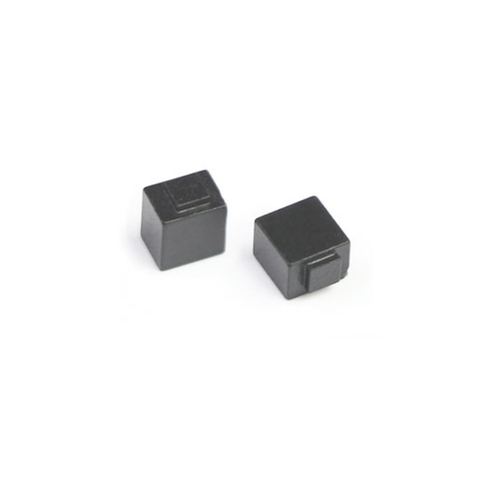
Ceramic RFID tags offer compact constructions for metal assets with limited mounting space. Tooling, instruments and equipment components need a tag position that accommodates the complete construction and attachment method. Ceramic material alone does not establish resistance to every solvent, impact or heat process.
A miniature catalogue starting point
RT-C101 lists a 4 × 4 mm footprint, 3 mm thickness, adhesive mounting and Alien Higgs 3 with 96-bit EPC and 512-bit user memory. Its catalogue identifies US 902–928 MHz and EU 865–868 MHz frequency entries; confirm the selected version for the deployment country.
The listed on-metal read distances are up to 0.8 m with a fixed reader and 0.4 m with a handheld. These describe catalogue test results, not a guaranteed reading boundary. Request the test conditions and compare installed samples against your working distance, orientation and capture time.
The catalogue separates storage at −40 to +150 °C from operation at −40 to +85 °C. Confirm the complete exposure, attachment and reading process, along with any required construction-specific environmental or compliance evidence.
Request samples for the installed asset
Send an asset photo with placement marked, surface material, available space, cleaning and handling exposure, reader model, countries of use and encoded data. Add sample and expected order quantities. Pricing, sample availability, fees, freight and dispatch or production schedules are confirmed in the quotation.
Request ceramic tag samples. For larger mounting spaces, compare ABS tags and the on-metal selection guide.