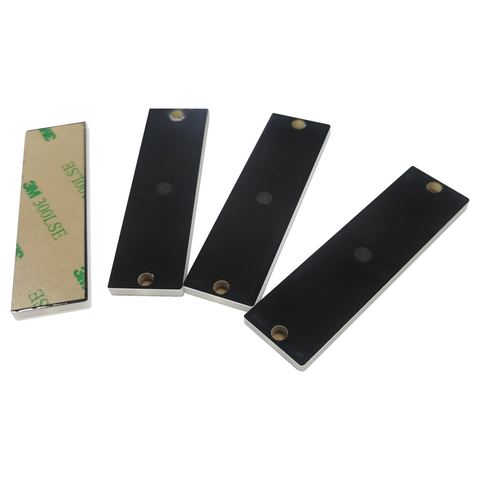
PCB RFID tags use a circuit-board substrate as both skeleton and antenna carrier, producing a slim, hard-wearing tag that keeps working where paper or PET labels would delaminate. They occupy the middle ground between flexible on-metal labels and bulky molded housings: thin enough for tight equipment gaps, sturdy enough for years of industrial service on metal surfaces exposed to heat, chemicals and pressure.
Specifying the right tag
Check clearance first. The 70 × 20 mm format in this family stands just 3.0 mm off the surface (excluding the chip bump), so it fits shelf edges, server rails and tooling recesses that would crush a housed tag. Temperature is the second gate: the design is rated for storage from −40 °C to +150 °C and operation from −20 °C to +100 °C, covering wash-down bays and hot plant rooms alike. Data capacity is the third: 128 bits of EPC plus 512 bits of user memory under ISO/IEC 18000-6C / EPCglobal Class 1 Gen 2 leave space for service history to ride along with the ID.
How to order
Send the mounting surface, gap dimensions and the read distance you need, and a quotation follows within 24 hours. We provide samples free of charge on freight-collect terms, usually within 3–5 working days, so you can validate reads on your own equipment. Bulk orders complete in 7–15 days after approval, produced on partner lines holding ISO 9001 certification, and chip, size and encoding are open to customization.