Custom RFID label supply
RFID labels.
Printed. Encoded.
Your artwork and item data, on a tag chosen for your application. Get help specifying printed labels, hang tags and EPC encoding before a volume order.
Independent sourcing · Format review · Sample approval
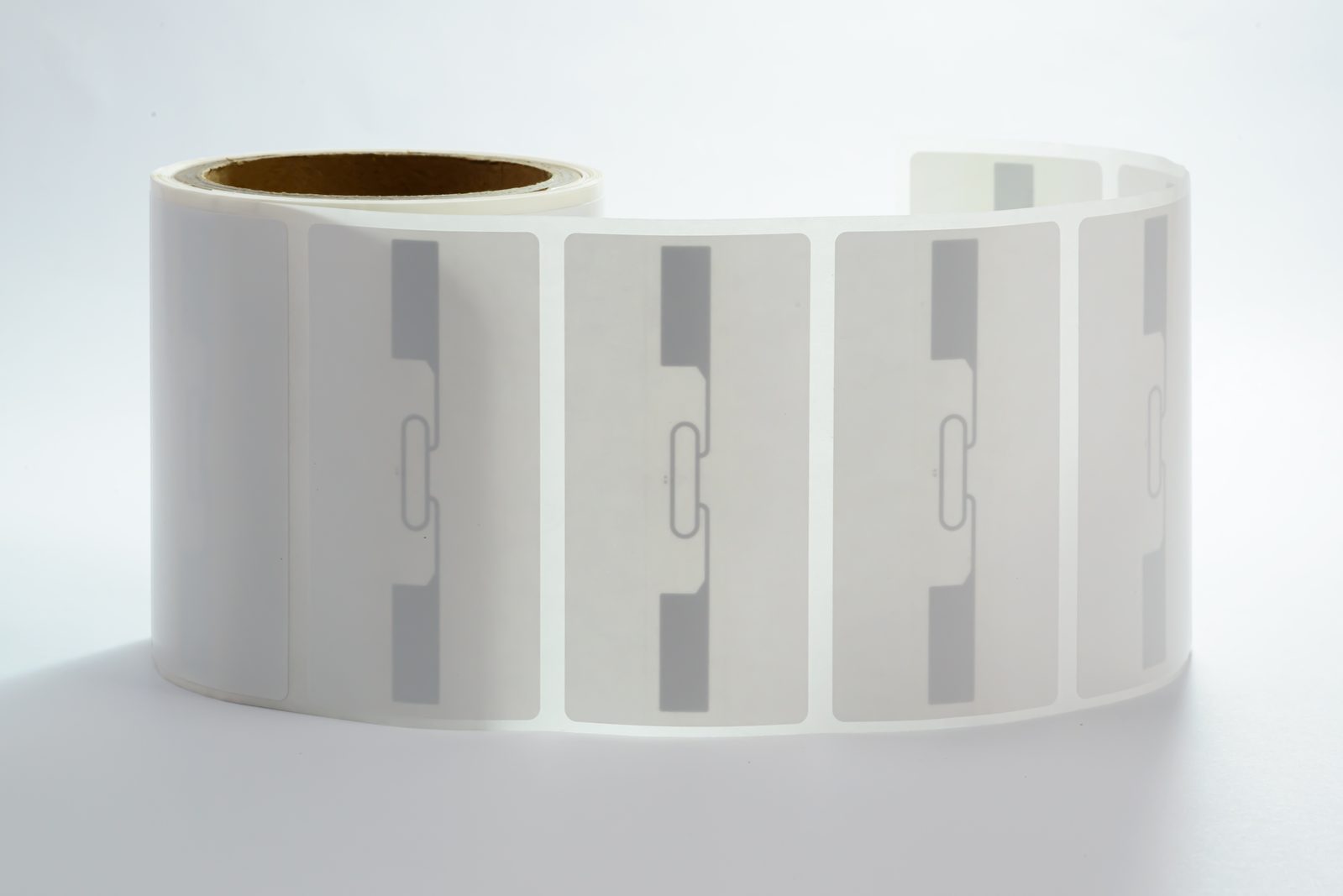
Catalogue example. Custom artwork and finished media require a separate proof.
Start with the delivery you need
One format. Three ways to supply it.
Availability depends on the selected label, inlay and finishing requirements. These are options to review in your quotation.
Prepare your sample request
Plan a printed and encoded sample proof
Start with the item, label format, delivery country and quantity. Specify blank, printed or printed-and-encoded supply; the detailed data file can follow.
Discuss my sample proofAsk us to confirm
- Label construction, chip, artwork revision and roll or sheet format.
- A printed identity and its matching EPC readback for proof approval.
- Proof quantity, setup charges, sample costs, freight and schedule.
Editable text file · No sign-up. Use it to record requirements and your trial results; it is a blank worksheet, not a test report. You can start an enquiry without completing it.
A better brief, a clearer quote
Tell us what
has to match.
Send the details you already know. A short description is enough to start; the final artwork, data and media specification can follow.
Read the printing & encoding checklistBuying a printer for in-house encoding? Plan the equipment and media trial →
- Item and deployment
- What will you tag, where will the label sit, and in which countries will it be read? Include the reader model and mounting surface.
- Finished format
- Outer label size, antenna space, face material and adhesive. For rolls: liner width, pitch, core, maximum outside diameter and winding direction.
- Print and artwork
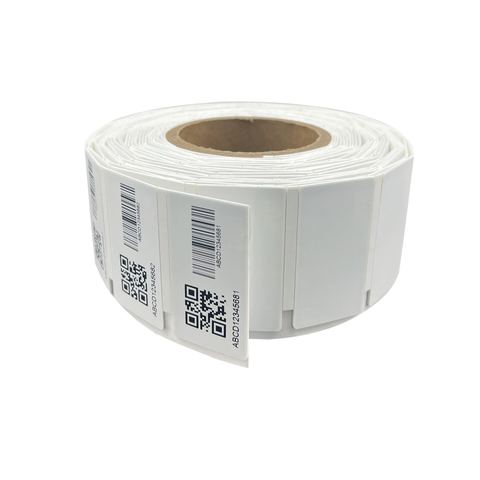
- Artwork file, colours, barcode type and variable fields. If you print in-house, include the exact RFID printer model and print method.
- Electronic identity
- Required chip and memory, EPC scheme, data length and serial allocation. Include lock or password requirements for review; TID is not a substitute for writable EPC memory.
- Proof and acceptance
- Agree a physical proof, readable barcode, RFID readback, printed-data/EPC matching and your sample test on the real item before approving a volume order.
- Quantity and delivery
- Pilot quantity, production volume, delivery country and required date. Minimum quantity, pricing, sample availability and lead time depend on the approved format.
Choose the construction first
Different items need different formats.
These catalogue products are starting points for comparison. Confirm the exact chip, finish and printer compatibility; an ordinary label and an on-metal construction are separate media decisions.
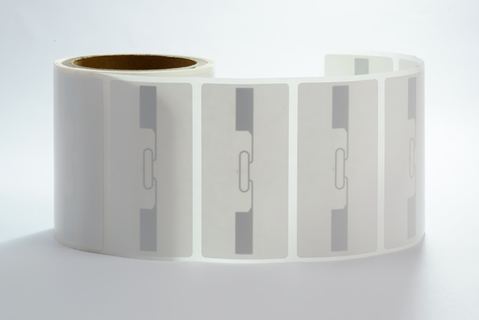
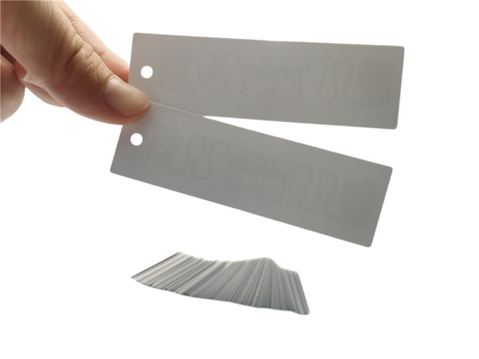
RT-M105
UHF flexible on-metal RFID label · 65×35 mm · Impinj M830
- Chip
- Impinj M830
- Size
- 65mm*35mm*1mm( LxWxT)
Before you approve the artwork and data
Is an EPC the same as the printed barcode?
Can I use the TID as the field to encode my item number?
Will any RFID label work in my RFID printer?
Is the antenna size the same as the printable label size?
Can every chip store the same EPC or user data?
What should I approve before a production order?
Request a quote
Let’s specify your printed RFID labels.
Share the item, artwork needs, delivery country and quantity. We will review suitable constructions and the print and EPC requirements, then confirm pricing and sample availability for the agreed format.
- Delivery: blank, printed or printed-and-encoded media, with the item and attachment format.
- Print and media: artwork, barcode fields and exact printer or roll requirements if applicable.
- Data and order: EPC scheme, example record, serial allocation, quantities and destination.
Prefer email? sales@rivotag.com