Choose RFID tags for books and files
Compare HF and UHF RFID library labels by reader interface, chip memory and finished format. Prepare circulation, shelf, stack and security-gate sample tests.
Validate this construction on your material with samples before a volume order.
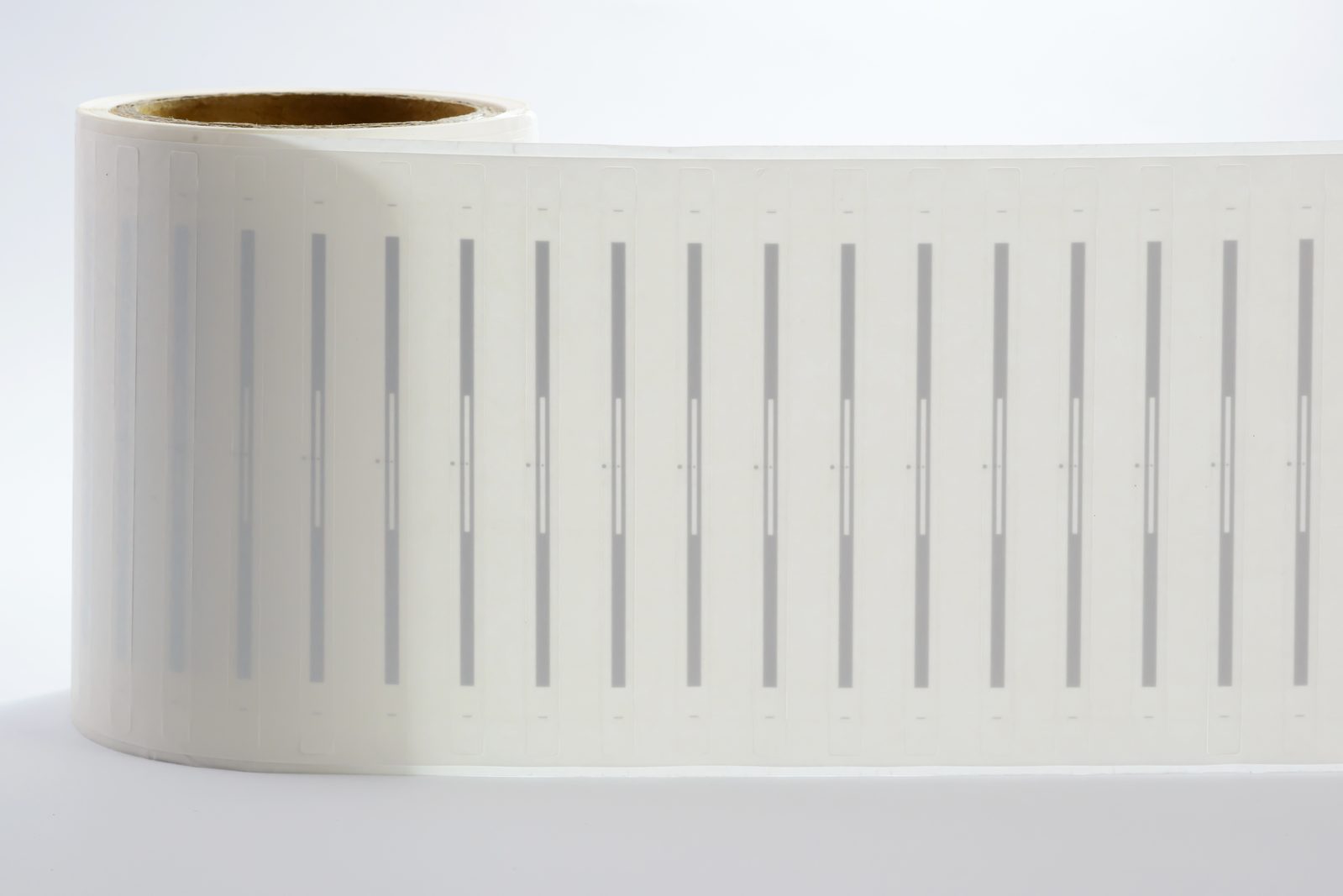
A listed 95×3 mm library label with NXP UCODE 9 under EPCglobal Class 1 Gen 2, 96-bit EPC and no user memory. Approve the supplied RT-S144 construction, operating band, placement and collection-record workflow; published fields shared with RT-S143 do not establish interchangeability.
At a glance
Project pricing based on your specification and quantity
Sample availability, fees and freight confirmed in your quote
Share your quantity, surface, printing and encoding requirements. We’ll confirm the configuration, volume pricing and sample availability.
Supplied by Rivotag through partner production lines.Technical information
Catalogue values describe this construction. Confirm any changes to chip, size, material, printing or encoding in your quotation.
| Product | UHF RFID Library Label |
|---|---|
| RFID Chip | NXP UCODE 9 |
| Label Size | 95mm*3mm |
| Face Material | Art-Paper, PET,PP synthetic paper & Other Customize Face Material |
| Protocol | ISO/IEC 18000-6C, EPCglobal Class 1 Gen 2 |
| Memory | 96-bit factory-locked TID (includes a 48-bit unique serial number), 96 bits EPC, 0 bit User Memory |
| Applications | Library management, Asset management, General purpose |
| Key Benefits | Fast reading,Multi-reading, Traceability |
| Customizable Label Size | Yes |
|---|---|
| Printing | Thermal transfer printing,Silk Screen Printing,and other custom printing. |
| Data initialization | Encoding |
| Operating Temperature/Humidity | -0~60℃ / 20%~80% RH |
|---|---|
| Storage Temperature/Humidity | 20~30℃ / 20%~60% RH |
| Shelf Life | 1 year in anti-static bag at 20~30℃ / 20% ~60% RH |
| ESD Voltage Immunity | 2 kV (HBM) |
| Bending Diameter | > 50mm |
| Other application environment requirements | Share the actual application and environmental exposure. Confirm construction feasibility, any design work, sample costs and the development schedule in the quotation. |
RT-S144 is a UHF library RFID label listed at 95×3 mm, with art paper, PET and PP synthetic face-material options. Use the available space and intended attachment method to prepare a placement trial. A narrow tag is not proof of invisible installation, resistance to peeling or suitability for every binding.
The NXP UCODE 9 entry specifies 96-bit EPC memory, no user memory and a 96-bit factory-locked TID that includes a 48-bit unique serial number. Assign the EPC through an agreed encoding plan and verify its association with the printed ID and collection record. Capture TID separately if the software needs that mapping; custom item data cannot be written into the factory-locked TID.
The published protocol is ISO/IEC 18000-6C / EPCglobal Class 1 Gen 2. A finished-label frequency row is not listed, so confirm the proposed band and reader settings for each deployment country. Check the circulation, inventory or security workflow in the installed system. A label identifier by itself does not provide the reader, software integration or security decision.
RT-S143 shares the published technical fields and catalogue image, but it retains a separate model reference. Confirm which configuration is offered and whether supplier evidence establishes an equivalent construction before using either as a replacement. Do not infer a read-performance difference or interchangeability from these records.
Use a representative sample of books or folders with their normal covers, bindings and shelf density. Record tag positions and reader settings, then measure capture time, missed items and unwanted nearby reads against agreed criteria. Check decoded IDs at the desk and any required shelf or return workflow before approving a collection order.
The catalogue lists 0 to 60 °C operation and a bending diameter above 50 mm. Confirm the supplied construction and evidence for relevant handling or environmental conditions rather than treating those entries as a guarantee for the installation. Prepare the system and data requirements with the HF and UHF library RFID buying guide.
Specify RT-S144 with item photos, available tag space, reader and software details, the required payload, artwork and any TID capture requirements. Include pilot and production quantities, delivery country and required date. Agree changes to the chip, size, facestock, printing or encoding before sample approval. Configuration feasibility, sample availability and costs, freight, pricing and production or supply schedules are confirmed in the quotation.
Chip memory reference: NXP UCODE 9 specification.
Compare HF and UHF RFID library labels by reader interface, chip memory and finished format. Prepare circulation, shelf, stack and security-gate sample tests.
A practical UHF RFID buying guide: match the surface, reader workflow, label size and EPC memory, then test samples before a volume order.
Sampling, quotations and supply through Rivotag.
Related selections for comparison. Confirm the specifications and sample performance for your application.
Request a quote
Tell us your quantity, mounting surface, size limits and read-range target. We’ll confirm a suitable configuration and pricing. Request samples here to test the tag in your own workflow.
Prefer email? sales@rivotag.com