Start here
Choose the tag around the item and the reading task. A chip name or a maximum read-distance claim alone cannot tell you whether a finished tag will work in your deployment.
1. Define the reading task before choosing a chip
Write down what a successful read means: a handheld inventory count on a shelf, one item passing a workstation, or cartons moving through a portal. Include the reader model, antenna arrangement, working distance, item orientation and the time available to capture each item. These are different requirements even when all three use passive UHF tags.
Specify the countries where the tags will be read and the reader configuration at each site. A catalogue frequency range describes the tag design; it does not authorize a reader to transmit across that entire range. Use a tag that covers your deployment band and confirm the local reader settings with your integrator.
Reference: GS1 RFID standards and spectrum resources.
2. Match the construction to the actual surface
List the material directly under the tag and what sits behind it. A dry carton, a liquid-filled bottle and a metal enclosure need separate trials. The label that performs well on an empty package may behave differently after the package is filled or stacked.
Start with a self-adhesive label for a suitable flat package, a hang tag when the item should not carry adhesive, and a purpose-built on-metal tag for direct metal mounting. Then choose the face material and adhesive around handling, abrasion, moisture, temperature and how long the label must remain attached.
- Send an item photo with the proposed tag position marked.
- Identify metal, foil, liquid and nearby tags in the final package.
- State whether the tag will be removed, reused or stay attached for the item’s service life.
Reference: Zebra RFID programming guide.
3. Separate the printable label size from the antenna size
The outer label dimensions define the space available for artwork and application. The antenna dimensions describe the inlay inside it. For example, RT-L151 is a 100 × 50 mm label with a 95 × 10 mm antenna; RT-L143 is a 100 × 100 mm label with an 80 × 20 mm antenna. The larger printable face is not, by itself, evidence of a longer read distance.
Choose memory from the data your software will encode. RT-L151 uses NXP UCODE 9 with 96 bits of EPC memory and no user memory. RT-L143 uses Impinj M730 with 128 bits of EPC memory and no user memory. Either may suit an identification workflow, but extra EPC capacity does not create a separate user-memory bank. Confirm the complete encoded payload before approving a chip substitution.
Reference: Impinj M700 and M800 series encoding recommendations.
4. Approve a sample on the finished item
A useful pilot repeats the conditions of production. Apply samples in the intended position, fill or assemble the item, and test with the reader settings you plan to use. Include difficult orientations and closely packed items. Record missed reads as well as successful reads so that a convenient demonstration does not become your acceptance test.
Before a volume order, agree on the selected construction, placement, encoded data and acceptance criteria. If the trial needs a different antenna, adhesive or tag position, change one factor at a time and keep the test setup in your report.
- Check the required items are captured within the real reading time window.
- Check nearby items outside the intended read zone are handled by the system.
- Verify the printed ID, barcode and decoded RFID value refer to the same item.
- Retest adhesion and readability after the handling the item will experience.
Three catalogue starting points
These are reference constructions to shortlist for sampling, selected from the published product specifications.
| Model | Construction | Label / antenna | EPC / user memory |
|---|---|---|---|
| RT-L151 · UCODE 9 | Self-adhesive label | 100 × 50 / 95 × 10 mm | 96 / 0 bits |
| RT-L143 · M730 | Logistics label | 100 × 100 / 80 × 20 mm | 128 / 0 bits |
| RT-G101 · M730 | Apparel hang tag | 83 × 25 / 70 × 14 mm | 128 / 0 bits |
Dimensions and memory are catalogue specifications. Read performance and attachment must be verified on your item; confirm the final chip and construction in the quotation.
Explore the catalogue options
Use these product specifications to prepare your shortlist. Confirm the final construction in your quotation and sample approval.
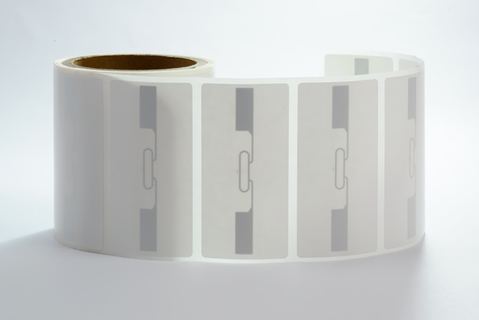
UHF RFID label · 100×50 mm · NXP UCODE 9 (RT-L151)
100 × 50 mm label with a narrow 95 × 10 mm antenna and UCODE 9.
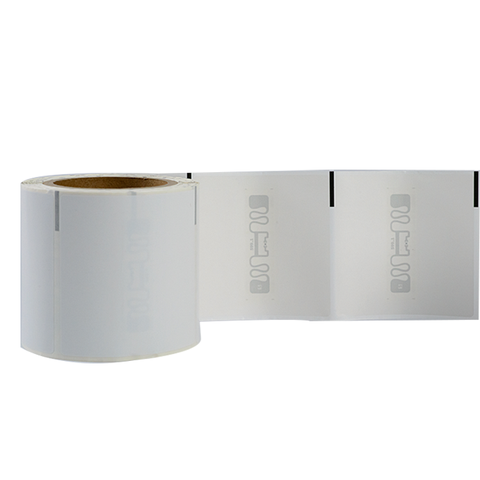
Logistics UHF RFID label · 100×100 mm · Impinj M730 (RT-L143)
100 × 100 mm printable face for shipment information, with an M730 inlay.
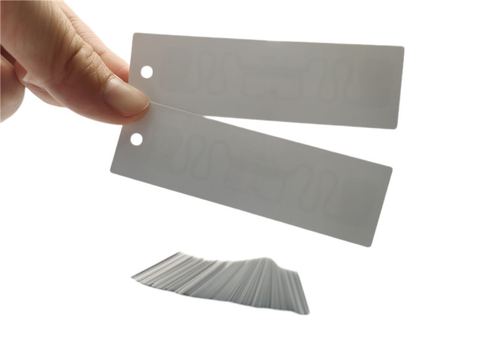
Apparel UHF RFID hang tag · 83×25 mm · Impinj M730 (RT-G101)
83 × 25 mm apparel format when a hang tag fits the attachment workflow.
Technical references
This guide combines the published Rivotag catalogue specifications with the primary technical references below. Product selection still depends on your item and reading setup.