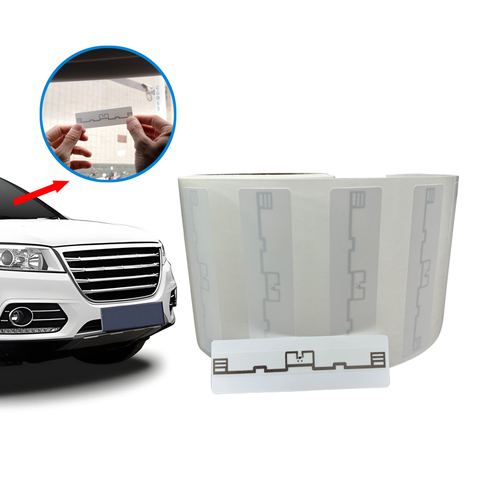
Choose vehicle identification RFID tags
Compare windshield and headlight RFID labels. Check coated glass, lane capture, removal behaviour and credential lifecycle before approving vehicle-tag samples.
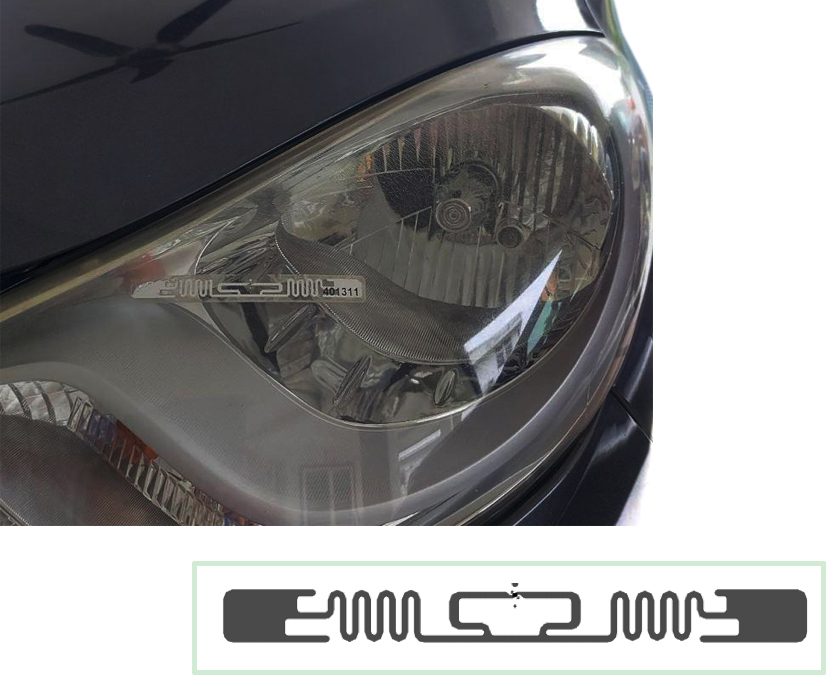
Validate this construction on your material with samples before a volume order.
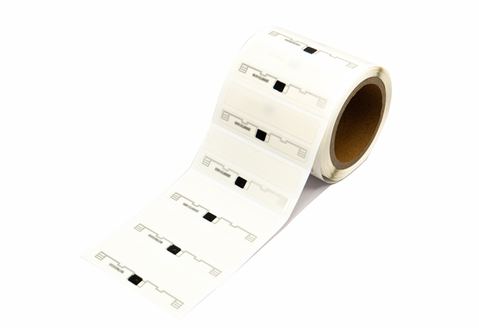
RT-F103 lists a 98×12 mm PET UHF headlight label and 95×8 mm antenna. Confirm the Alien Higgs 9 or approved alternative configuration, then trial the lens material, coating, curvature, adhesive and dwell time. Removal response and environmental performance require sample acceptance.
At a glance
Project pricing based on your specification and quantity
Sample availability, fees and freight confirmed in your quote
Share your quantity, surface, printing and encoding requirements. We’ll confirm the configuration, volume pricing and sample availability.
Supplied by Rivotag through partner production lines.Technical information
Catalogue values describe this construction. Confirm any changes to chip, size, material, printing or encoding in your quotation.
| Product | RT-F103 · headlight UHF RFID label |
|---|---|
| RFID Chip | Alien Higgs 9 (other options require approval) |
| Label Size | 98mm*12mm |
| Antenna Size | 95*8mm |
| Face Material | PET |
| Protocol | ISO/IEC 18000-6C, EPCglobal Class Gen 2 |
| Applications | Car headlight, Luxury goods management, Anti-counterfeiting |
| Key Benefits | Removal response and exposure performance require approved sample tests |
| Customizable Label Size | Yes |
|---|---|
| Printing | Thermal transfer printing,Silk Screen Printing,and other custom printing. |
| Data initialization | Encoding |
| Operating Temperature/Humidity | -0~60℃ / 20%~80% RH |
|---|---|
| Storage Temperature/Humidity | 20~30℃ / 20%~60% RH |
| Shelf Life | 1 year in anti-static bag at 20~30℃ / 20% ~60% RH |
| ESD Voltage Immunity | 2 kV (HBM) |
| Bending Diameter | > 50mm |
| Other application environment requirements | Share the actual application and environmental exposure. Confirm construction feasibility, any design work, sample costs and the development schedule in the quotation. |
RT-F103 lists a 98×12 mm PET label with a 95×8 mm antenna for vehicle-headlight identification. Choose the mounting position around the actual lens material, coating and curvature. Approve the adhesive and surface preparation with the lens supplier or installation owner, using a finished-label sample.
The catalogue chip entry is Alien Higgs 9, with other options subject to approval. Confirm the supplied chip, memory layout, EPC format and any TID mapping in the quotation and sample readback. Approve the supplier specification and installation drawing for the quoted construction before production.
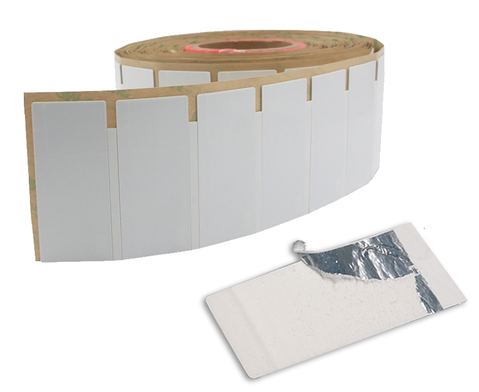
Apply samples with the selected adhesive and agreed dwell time. Test removal and reapplication to the original and another representative lens at defined temperatures. Record visible damage, adhesive residue, lens condition and RFID response before and after the attempts, then agree the required removal-response criteria.
Include the light, heat, moisture and cleaning or washing exposure required by the vehicle installation in the trial specification. Evaluate attachment and RFID response after those exposures. Test the actual mounting position with the proposed reader, antennas, band, power, approach angles, speeds and lane layout; review missed and adjacent-lane reads with the access controller.
An EPC or TID read alone does not authenticate the vehicle or authorize entry. Agree backend credential issuance, revocation and replacement, including rejection of the old identifier. Use anonymized credential records and example EPCs for data approval.
For RT-F103, provide quantity, lens and coating details, mounting position, adhesive and dwell requirements, reader setup, exposure conditions and delivery country. Confirm the final construction, chip, customization, sample fees, freight, price, supply schedule and acceptance criteria in the quotation. Other catalogue applications require their own substrate and workflow trial.
Compare windshield and headlight RFID labels. Check coated glass, lane capture, removal behaviour and credential lifecycle before approving vehicle-tag samples.
Prepare an RFID printing and EPC encoding order: artwork, barcode data, chip memory, label and antenna sizes, printer rolls, serialisation and sample verification.
Sampling, quotations and supply through Rivotag.
Related selections for comparison. Confirm the specifications and sample performance for your application.
RT-F101
RT-F104
RT-F102
Request a quote
Tell us your quantity, mounting surface, size limits and read-range target. We’ll confirm a suitable configuration and pricing. Request samples here to test the tag in your own workflow.
Prefer email? sales@rivotag.com