Start here
Select the tag for the vehicle surface and lane. EPC supplies an identifier; software permissions, installation and lane acceptance determine the resulting access decision.
1. Specify the lane and equipment
Define entry, exit or another identification point: lane width, antenna direction, stopping position, vehicle speed and available capture time. Provide reader and antenna models, controller and software versions. Confirm support for the selected tag and encoded format; a vehicle application name does not establish parking or toll-system compatibility.
State the deployment country and confirm tag coverage of the regional band, permitted reader channels and power. GS1 describes the air interface and defers relevant parameters to local regulations. Its current standard is not evidence that these catalogue tags are certified to that version.
Reference: GS1 EPC Gen2 air-interface standard and regional operating parameters.
2. Check the specific windshield
Identify glass coatings, tint films and metalized layers from the vehicle documentation. Rosslare describes reduced reading performance with metallic windshield coatings and recommends locating any uncoated RF Cutout using the owner’s manual. Its reader-specific installation distances are not Rivotag placement specifications.
Mark candidate positions on a vehicle photo and approve them with the owner. Test the intended reader direction before final attachment, then verify installed samples. Include representative vehicle types and replacement glass; one successful car does not qualify every windshield. Check inside and outside print visibility when considering double-sided PET.
Reference: Rosslare: windshield installation guidance for AY-U9xxBT readers.
3. Trial the headlight surface separately
RT-F103 is a narrow PET headlight candidate. Identify the lens plastic, coating, curvature and approved mounting area. Request a drawing and attachment specification, then check conformity, edge lifting and readability on the actual lamp. A windshield result does not qualify this installation.
Specify exterior exposure: sunlight, rain, temperature changes, washing and cleaning chemicals. Agree sample exposure and inspection criteria for adhesion, printing and RFID capture. Catalogue material or chip information alone does not establish finished-label UV or washing durability.
4. Separate reads from access events
Run installed samples through the real lane at expected speeds and stopping positions. Set a capture window and acceptable missed-vehicle threshold. Include queues, adjacent lanes, different vehicle heights and approach directions. Compare intended credentials with distinct EPCs captured within the window; repeated reads do not represent additional vehicles.
Keep reader settings and raw EPC records with timestamps and read-point identifiers. Correlate them with software permission decisions and barrier-command logs. Investigate missed, repeated and neighboring reads separately from denied access. Agree how the system selects the intended vehicle when several credentials are visible.
5. Define removal acceptance
Fragile construction is a removal response to verify. Apply samples to the intended surface with the agreed preparation and dwell time. Record condition and reads before removal, after the specified removal attempt and after attempted reattachment.
Inspect antenna damage, residue and visible evidence alongside repeated read checks. An unreadable tag alone does not prove tampering: placement, reader setup or damage can also cause failure. Agree the inspection and replacement procedure.
6. Approve memory and credential lifecycle
RT-F101 lists Higgs 4 with 128-bit EPC and 128-bit user memory, matching Alien’s public draft datasheet. RT-S111 uses Higgs 9: nominal 96-bit EPC and up to 688 user bits. Confirm the final allocation against the payload rather than combining maximum capacities. RT-F103 lists H9 or custom chips; confirm its chip and memory before encoding.
Use anonymized credential examples to approve printed IDs, decoded EPCs and software associations. Keep authorization in the agreed access-control workflow. Define issuance, expiry, revocation, lost-tag replacement and duplicate detection. Disable the old software credential before activating a replacement, retain history and test that retired identifiers are denied.
Reference: Alien Higgs 9: nominal EPC and expandable memory.
7. Send a qualified sample brief
Prepare a sample and quotation request with:
- Vehicle types, installation photos and drawings, glass or lens material, and removal requirements.
- Reader, antenna and software models, country, lane layout, speed and capture window.
- Artwork, anonymized credential examples, mapping and revocation procedures, acceptance criteria.
- Sample and order quantities, delivery destination, data approval cutoff and required arrival date.
Three vehicle formats to shortlist
Compare placement and attachment on representative vehicles using the same lane setup.
| Model / position | Face material | Face / antenna | Sample focus |
|---|---|---|---|
| RT-F101 · windshield | White PET | 97 × 27 / 94 × 8 mm | Glass placement and removal response |
| RT-S111 · windshield | Double-sided PET | 96 × 23 / 93 × 19 mm | Print visibility and credential mapping |
| RT-F103 · headlight | PET | 98 × 12 / 95 × 8 mm | Lens curvature and exterior exposure |
Confirm chip, memory allocation, adhesive and installation drawing for the quoted construction.
Explore the catalogue options
Request installed samples rather than choosing from maximum catalogue read distance.
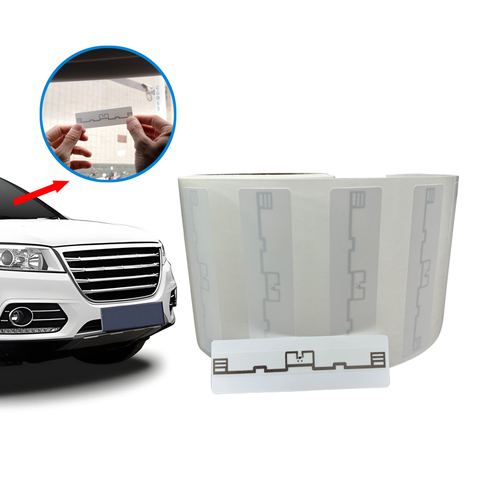
Windshield UHF tamper-evident fragile RFID label · 97×27 mm (RT-F101)
RT-F101: white PET windshield format for placement and removal trials.
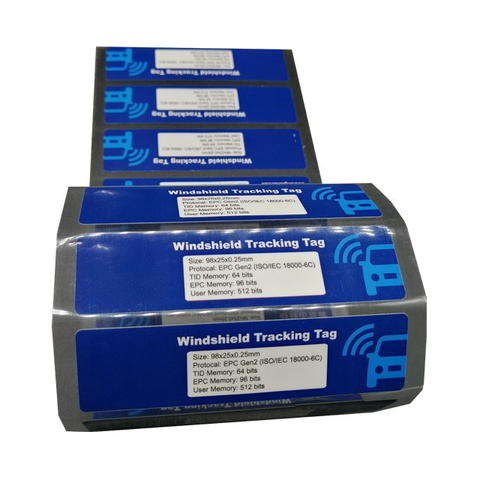
Windshield UHF RFID tag · 96×23 mm · Alien Higgs 9 (RT-S111)
RT-S111: double-sided PET for print visibility and lane testing.
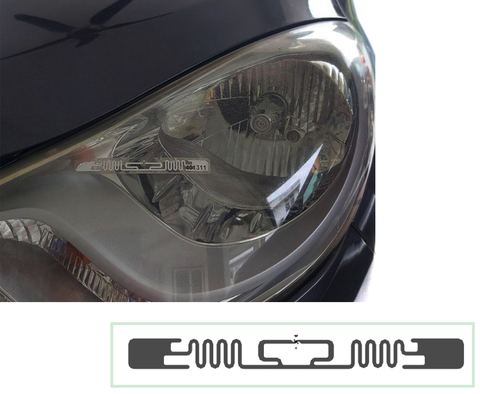
Headlight Anti Transfer UHF tamper-evident fragile RFID label · 98×12 mm · Alien Higgs 9 (RT-F103)
RT-F103: narrow PET format for a separate headlight trial.
Technical references
These official sources cover chip memory, protocol and an example reader’s installation guidance. They do not verify Rivotag tag compatibility, tampering or finished-product qualification. Validate the quoted construction and complete access workflow separately.