Start here
A useful RFID tag price belongs to a defined construction, quantity and scope of work. Compare the same approved specification and delivery basis, with one-time costs and exclusions visible. Rivotag prices each enquiry after reviewing those details; this guide is a comparison method, not a price list.
1. Price the same finished tag
Give each supplier one specification revision. Identify the finished format, dimensions, inlay and chip, face material, adhesive or attachment, required evidence and approved artwork. Ask the supplier to mark every proposed substitution. Two offers described only as “UHF RFID label” are not yet comparable.
Confirm the data requirement before comparing chip alternatives. GS1 explains that EPC coding schemes have different memory and serial-format constraints. A chip substitution needs a payload and system review, even when the tag dimensions stay the same.
- Compare an inlay with an inlay, or a finished label with the same finished label scope.
- List an adhesive label, garment hang tag and on-metal construction as separate options.
- Keep any proposed alternative on a separate quotation line until its specification and sample are approved.
Reference: GS1: EPC serialization, coding schemes and tag memory.
2. Separate order quantity from annual demand
Request prices for the quantities you could actually release as purchase orders. Show the total alongside each artwork, size or encoding variant, the quantity in each shipment and the delivery schedule. An annual forecast is different from a firm order for one production batch.
Ask whether the minimum applies per construction, artwork, encoded-data job or release. For example, 100,000 labels in one approved design and 100,000 split across ten designs are different quotation requests; this example does not establish a discount or a minimum order. Ask which charges recur on a repeat order and when a changed specification requires a new quote.
3. Compare blank, printed and encoded supply separately
Mark whether the quoted deliverable is blank media, printed media or printed-and-encoded media. For printed supply, list the approved artwork and variable fields. For encoded supply, state who prepares the data, allocates serials and checks the relationship between the visible identity and the decoded EPC. Ask which setup and verification work the price includes.
For in-house printing, compare the complete roll specification and the exact RFID printer configuration. Zebra publishes different media and placement guidelines by printer model. Its documents illustrate why the printer belongs in the specification; they do not establish compatibility of a Rivotag catalogue tag.
Reference: Zebra: model-specific RFID media and inlay placement guidelines.
4. Make the cost boundary explicit
Record currency, the price unit and every included charge before comparing totals. Ask suppliers to separate the recurring tag or service price from any artwork preparation, tooling, data setup, proof or sample fees. If an item is included, record “included”; if it is unknown, record “to confirm”. A blank cell is not zero.
For one shipment, use: tag quantity × price per tag + separately charged setup and services + the quoted delivery charges. Convert a price per roll or per thousand tags to the same unit first, and count each charge once. List excluded costs separately so both quotations use the same boundary. This is a comparison subtotal for the stated scope.
Confirm packaging, delivery destination, shipment schedule, quote validity and any stated exclusions. For a total project budget, keep readers, antennas, printers, software, integration, installation and ongoing support separate from tag supply. Ask the parties responsible for those items to quote their own scope.
5. Agree what the quoted delivery must pass
Keep the sample approval record with the quoted specification. Define the checks, responsibility and timing for quantity, print, encoded identity, attachment and the intended reading task. A chip or construction change after approval needs review before the revised order is accepted.
Ask how nonconforming units, reprints and replacement EPCs will be handled, and what report accompanies delivery. Record which investigation, replacement, freight or rework responsibilities are agreed. Do not assume a warranty, free replacements or a guaranteed yield from a unit price alone.
6. Request missing scope before choosing a quote
Use the comparison table below for each offer. Highlight differences rather than hiding them in a total. Ask for a revised quotation when the supplier changes the construction, batch plan, supplied work or delivery basis. Keep the revision date with the corresponding sample and artwork approvals.
To request a Rivotag quotation, send the application or candidate model, one specification version, quantity by variant and batch, blank/printed/encoded requirement, delivery country and needed date. Indicate unknown details and request that any alternatives be listed separately. Sample availability, charges, minimum quantity and lead time are confirmed in the actual quotation.
Six lines to compare in every RFID quotation
Use the same comparison sheet for each offer. The entries below are questions to resolve, not advertised Rivotag prices or commercial terms.
| Quotation line | Compare on the same basis | Ask when it is missing |
|---|---|---|
| Finished specification | Same revision, inlay/chip, materials, size and attachment | Is this the requested construction or a separately identified alternative? |
| Quantity and releases | Units per variant, batch and shipment; repeat-order basis | What minimum applies to each variant or release? |
| Supplied work | Blank, printed or encoded; data preparation and verification | Which tasks and reports are included in the unit price? |
| One-time and repeat charges | Currency, price unit, setup, proofs and recurring fees | Which fees are additional, included or charged again on reorder? |
| Packaging and delivery | Pack/roll format, destination, schedule and listed exclusions | Which delivery charges are included for this shipment? |
| Approval and validity | Approved sample/revision, acceptance, replacements and quote expiry | What changes require a revised quote or sample approval? |
Keep unconfirmed costs visible. A lower subtotal is not a like-for-like saving while specification, quantity or included work differs.
An editable plain-text sheet for your own quote review. No email address is required; download it and fill it in locally.
Explore the catalogue options
These are separate construction examples to describe in an enquiry. They are not price tiers, interchangeable alternatives or a statement of current stock.
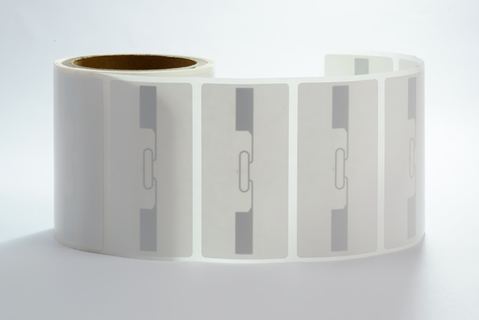
UHF RFID label · 100×50 mm · NXP UCODE 9 (RT-L151)
RT-L151: use an adhesive label example to identify the complete label, roll and finishing scope.
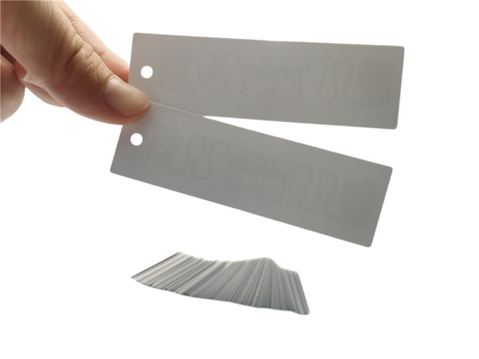
Apparel UHF RFID hang tag · 83×25 mm · Impinj M730 (RT-G101)
RT-G101: use a garment hang tag example to separate ticket construction, artwork and attachment requirements.
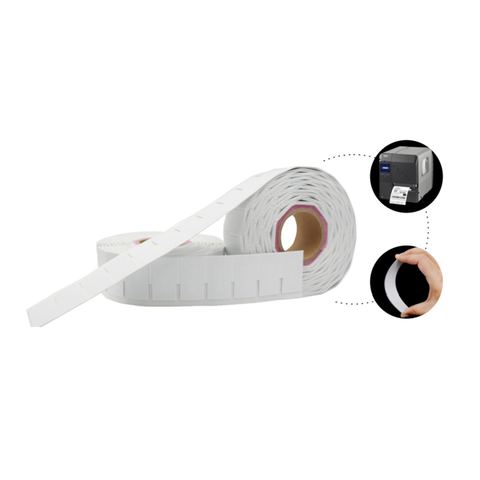
Printable UHF flexible on-metal RFID label · 65×35 mm · Impinj Monza R6 (RT-M110)
RT-M110: use an on-metal label example to request the exact approved construction, printing setup and supply configuration.
Technical references
The comparison workflow is Rivotag buyer guidance. The references below support the memory and printer-specification checks only; neither source supplies Rivotag pricing, commercial terms or product approval.