Select an on-metal RFID tag
Compare on-metal RFID labels and ABS tags by thickness, mounting, band and chip memory. Prepare installed sample tests and review Monza R6 supply before ordering.
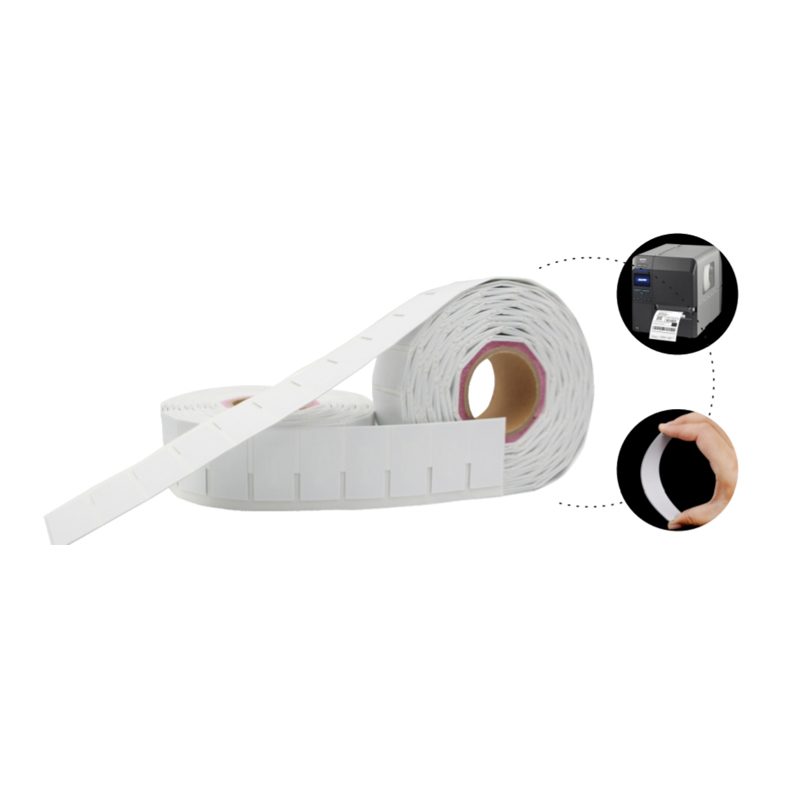
Validate this construction on your material with samples before a volume order.
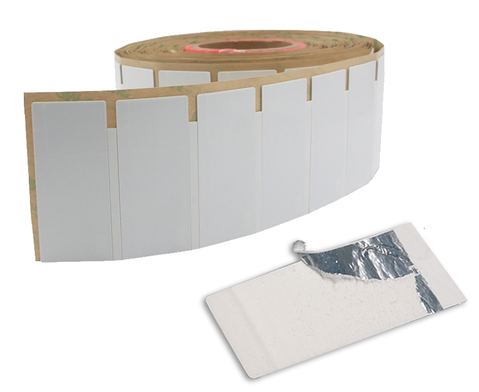
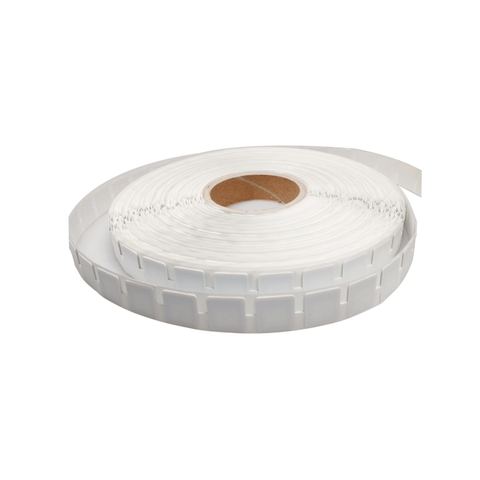
A 65×35×0.75 mm flexible PET on-metal label with Impinj Monza R6, 96-bit EPC memory and no user memory. Review R6 lifecycle and supply, RFID printer compatibility and the actual metal asset before ordering.
At a glance
Project pricing based on your specification and quantity
Sample availability, fees and freight confirmed in your quote
Share your quantity, surface, printing and encoding requirements. We’ll confirm the configuration, volume pricing and sample availability.
Supplied by Rivotag through partner production lines.Technical information
Catalogue values describe this construction. Confirm any changes to chip, size, material, printing or encoding in your quotation.
| RFID Chip | Impinj Monza R6 |
|---|---|
| Memory | EPC 96bits;User memory 0 bits |
| Label Size | 65mm*35mm*0.75mm( LxWxT) |
| Face Material | PET |
| Protocol | ISO/IEC 18000-6C, EPCglobal Class 1 Gen 2 |
| Frequency range | 902-928MHZ |
| Reading distance | 0-4 meters (metal surface, by handheld) |
| Reading distance | 0-3 meters ( non-metallic surface, by handheld) |
| Re-writeable | 100000 times |
| Conformance test | Catalogue lists Voyantic testing; confirm the method, acceptance limits and model-specific batch report. |
| Customizable Label Size | Yes |
|---|---|
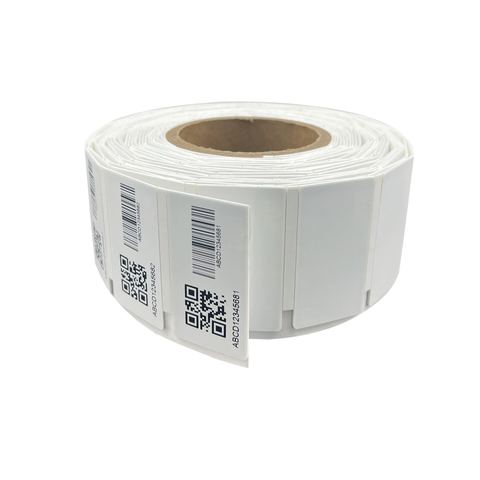
| Printing | print text , barcode and QR code, color printing |
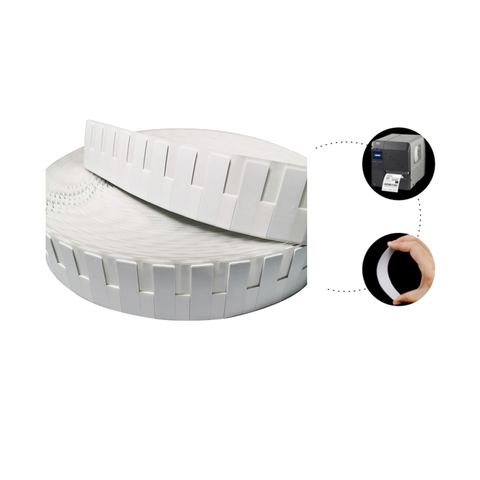
| Printer | Catalogue examples: SATO CL4NX, Boside TX3R and Zebra ZT410 Silverline. Confirm the exact RFID option, media setup and sample compatibility. |
| Data initialization | EPC encoding; TID capture means readback and identity mapping, not writing custom item data into TID. |
| Operating Temperature | -40~85℃ |
|---|---|
| Storage Temperature | -40~85℃ |
RT-M110 is a printable flexible on-metal UHF RFID label with a 65×35×0.75 mm PET construction. The supplier catalogue model is ML065035(R6). It is a candidate to evaluate for office and IT equipment, valuable assets, metal containers and spare parts where a low-profile printed identifier is needed.
The catalogue specifies Impinj Monza R6, 96-bit EPC memory, no user memory and a 902–928 MHz finished-label frequency band. Confirm the deployment country, permitted reader band and the EPC data required by your receiving software before selecting samples.
Impinj’s current Monza R6 series specification table states that Monza R6 is in the end-of-life process. Review this lifecycle status when assessing a new design or continuing an existing deployment. The notice does not establish whether RT-M110 is currently available. Confirm the requested quantity, delivery timing and replenishment needs in the quotation for the selected construction.
Monza R6-P is a different chip with different memory and data-protection options; it is not an automatic substitute for this R6 configuration. If another chip or construction is proposed, approve its exact specification, encoding requirements and sample results before ordering. A chip specification alone does not establish the finished label’s read distance or attachment performance.
Share the asset material, coating, available space and any surface curvature. Include the complete tag thickness and attachment arrangement when checking clearances. Test the supplied construction on the actual asset with the intended handheld or fixed reader, antenna, operating band, power and orientations. Check edge lifting after handling and the cleaning or exposure conditions relevant to the installation.
The catalogue lists handheld reading distances of 0–4 m on metal and 0–3 m on non-metallic surfaces. These are references for catalogue test conditions, not guaranteed distances for a different installation. Request the reader and test setup behind the values, then agree the useful read zone and missed-read limits for your own samples.
The -40 to +85 °C operating and storage entries and 100,000 rewrite cycles are also catalogue values. Confirm the applicable IC specification and evidence for the exact finished construction, temperature exposure and required writing task before using them as acceptance limits. If Voyantic evidence is required, agree the test method, acceptance limits and model-specific batch report; a catalogue testing entry does not establish a guaranteed pass rate.
Text, barcode, QR code and colour printing can be reviewed for the selected media. For in-house printing, include the exact RFID printer model and hardware option, media thickness, liner width, pitch, core and roll requirements. The catalogue lists SATO CL4NX, Boside TX3R and Zebra ZT410 Silverline as examples to review. Confirm media handling, RFID calibration and encoding with a sample roll before relying on a printer combination.
Agree the artwork, EPC payload and any TID readback or identity mapping. TID capture means reading the chip identity, not writing custom item data into TID. Verify that the printed identifier, encoded EPC and any captured TID map to the intended asset record.
Send sample and expected production quantities, delivery country, required date and replenishment needs with the installation and printing requirements. Confirm the final chip, construction and sample acceptance checks before volume production. Pricing, minimum quantity, sample availability and costs, freight, production and dispatch schedules are confirmed in the quotation for that configuration.
Compare on-metal RFID labels and ABS tags by thickness, mounting, band and chip memory. Prepare installed sample tests and review Monza R6 supply before ordering.
A practical UHF RFID buying guide: match the surface, reader workflow, label size and EPC memory, then test samples before a volume order.
Sampling, quotations and supply through Rivotag.
Related selections for comparison. Confirm the specifications and sample performance for your application.
RT-F104
RT-M109
RT-M106
RT-M105
Request a quote
Tell us your quantity, mounting surface, size limits and read-range target. We’ll confirm a suitable configuration and pricing. Request samples here to test the tag in your own workflow.
Prefer email? sales@rivotag.com