Start here
A sew-in textile format does not establish wash durability. Approve the exact construction, attachment and encoded data through a documented garment trial before ordering production stock.
1. Mark the antenna, sewing allowance and fold
The printable face is not the antenna footprint. RT-T101 has a 136 × 38 mm nylon face and a 50 × 30 mm antenna; RT-T102 has a 60 × 30 mm face and a 42 × 16 mm antenna. The remaining area is not automatically an approved sewing or folding zone.
Request a construction drawing showing the antenna, chip, cut lines and permitted stitch and fold positions. Send your seam or care-label drawing, then test the finished attachment. Keep needles, cuts and tight folds clear of the inlay unless the exact construction has been qualified for that placement.
2. Sample the printed and folded label
Print the actual artwork using the proposed printer, ribbon and settings. Check barcode scanability, text, edge alignment and RFID readback before sewing; repeat after folding and attachment. Test hanging, folded and packed garments using your normal reader setup.
RT-T103 is sold as a satin-ribbon format, while its catalogue material field says “silk ribbon.” Confirm the actual fibre composition and finished construction. A material name alone does not prove print compatibility, comfort or care-process resistance.
3. Define the care process and acceptance checks
Specify domestic or industrial care, wash temperature and duration, detergent or other chemicals, drying method, pressing conditions and required cycles. Request a model-specific report identifying the complete label construction, attachment and tested process. Chip temperature or memory-endurance figures do not establish finished-label wash performance.
ISO 6330 describes domestic washing and drying tests; ISO 15797 covers industrial workwear testing. These scopes help define a test brief, but citing a standard does not certify these catalogue tags. Industrial-laundry suitability requires separate evidence and trials in the intended process.
- Record EPC and attachment condition before exposure and at agreed checkpoints.
- Repeat the same read task after care; document misses, loose stitching and damage.
- Compare printed ID, decoded EPC and the software item record after the final cycle.
Reference: ISO 6330:2021 domestic washing and drying test scope.
4. Keep item identity and chip identity distinct
RT-T101, RT-T102 and RT-T103 use UCODE 9 with 96-bit EPC memory and no user memory. Agree a unique item-level EPC payload, duplicate handling and software association before encoding. NXP specifies a factory-locked 96-bit TID containing a 48-bit serial number: capture it for mapping if needed; do not treat TID as writable garment data.
If considering the Higgs 9-based RT-T104 instead, confirm its exact memory allocation against your payload before substitution.
Reference: NXP UCODE 9 memory specification.
5. Send a sample brief procurement can use
Ask for the proposed construction and evidence before approving a production configuration. Include:
- Garment fabric, placement photo, dimensions, stitch and fold drawing.
- Printer and artwork; EPC example and any TID mapping requirement.
- Reader model, country of use, reading task and acceptance criteria.
- Care process, checkpoints, sample and order quantities, delivery country and required date.
Three apparel textile candidates
Catalogue data for a sample shortlist; these entries are not wash-test results.
| Model | Face / antenna | Catalogue face material | Chip |
|---|---|---|---|
| RT-T101 | 136 × 38 / 50 × 30 mm | Nylon | NXP UCODE 9 |
| RT-T102 | 60 × 30 / 42 × 16 mm | Nylon | NXP UCODE 9 |
| RT-T103 | 60 × 30 / 42 × 16 mm | Silk ribbon; confirm composition | NXP UCODE 9 |
Confirm the drawing, material, printing and care-process qualification for the exact quoted construction. Dimensions do not define safe stitch positions or a wash-cycle rating.
Explore the catalogue options
Use these product specifications to prepare your shortlist. Confirm the final construction in your quotation and sample approval.
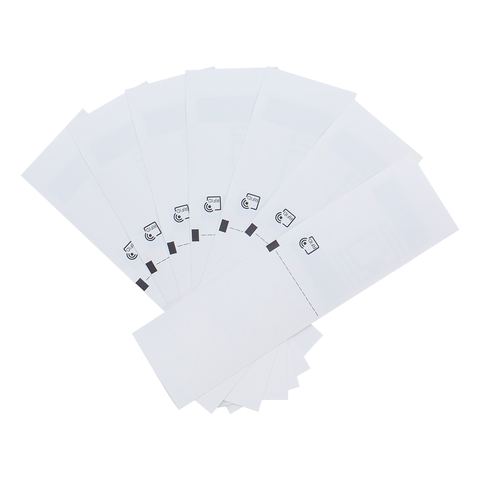
Apparel UHF RFID textile tag · 136×38 mm · NXP UCODE 9 (RT-T101)
Compare the larger face against your artwork, folding plan and seam space.
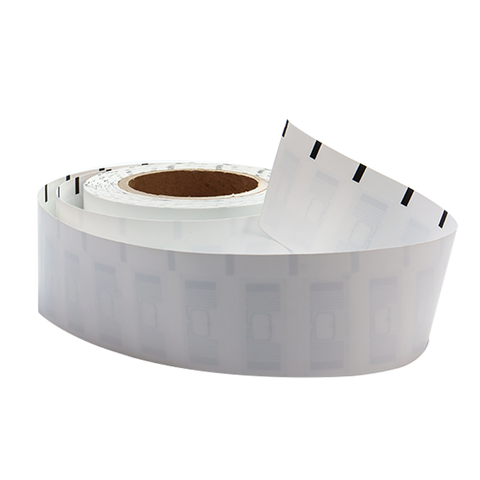
Nylon UHF RFID textile tag · 60×30 mm · NXP UCODE 9 (RT-T102)
Evaluate the compact nylon format with a printed, attached garment sample.
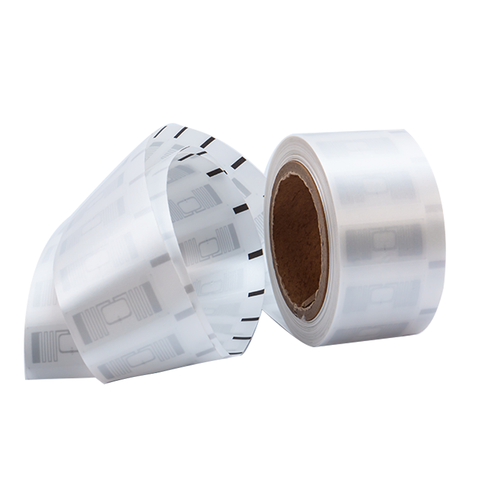
Satin Ribbon UHF RFID textile tag · 60×30 mm · NXP UCODE 9 (RT-T103)
Review ribbon composition and printing before a care-process trial.
Technical references
This guide combines the published Rivotag catalogue specifications with the primary technical references below. Product selection still depends on your item and reading setup.